Color recognition sensor:What is a color recognition sensor and how does it work?
Q: What is a color recognition sensor and how does it work?
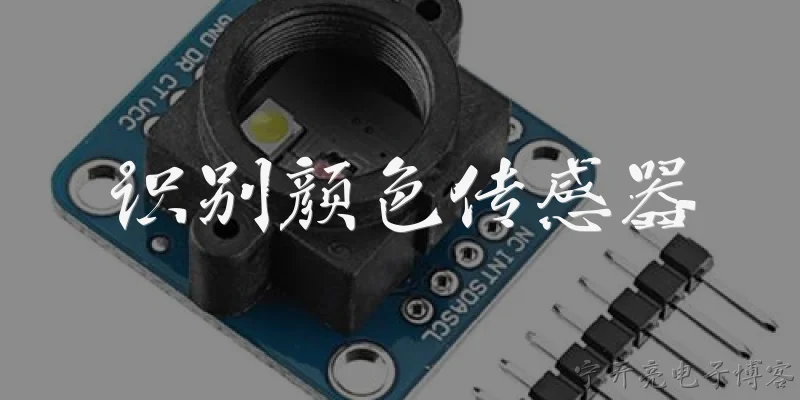
A: A color recognition sensor is an electronic device that detects and identifies colors by measuring the intensity of different light wavelengths. It typically uses a white light source to illuminate the target object, then analyzes the reflected light using photodetectors with color filters (red, green, blue) or a spectrometer. The sensor converts the light into electrical signals, which are processed to determine the object's color. Most modern sensors output digital values (e.g., RGB or HSV) that can be compared against stored reference values. They are widely used in industrial automation, packaging, printing, and robotics for tasks like sorting, quality control, and object tracking. Some sensors can distinguish subtle color differences, while others are designed for high-speed detection or operation in harsh environments.
Q: What are the main applications of color recognition sensors in industrial automation?
A: In industrial automation, color recognition sensors are used for a variety of tasks. They help in sorting products by color, such as separating differently colored parts on a conveyor belt. They ensure quality control by verifying that labels, caps, or printed materials match specified colors. In packaging, they detect registration marks for accurate cutting and sealing. They also assist in robotic guidance, enabling robots to pick objects based on color. Additionally, they are used in food processing to check the ripeness or quality of fruits and vegetables. Other applications include detecting color-coded wires in electronics assembly, monitoring paint or dye consistency, and identifying color-coded containers in logistics. Their ability to provide real-time, non-contact detection makes them indispensable in high-speed production lines.
Q: What factors should be considered when selecting a color recognition sensor?
A: When selecting a color recognition sensor, consider the following factors: First, the sensing distance and field of view—ensure it matches your application's geometry. Second, the color resolution and accuracy; some sensors can detect subtle shades, while others only distinguish basic colors. Third, the light source—white LED, laser, or RGB LEDs affect performance under different ambient light. Fourth, the output type: digital (e.g., RGB values), analog, or switching (e.g., NPN/PNP). Fifth, response time—critical for high-speed sorting. Sixth, environmental conditions: IP rating for dust/water resistance, operating temperature, and resistance to ambient light interference. Seventh, ease of setup and calibration, including teach-in functions. Finally, cost and compatibility with existing control systems (e.g., PLC, PC). Balancing these factors ensures optimal performance for your specific task.
Q: How do color recognition sensors differ from colorimeters and spectrophotometers?
A: Color recognition sensors, colorimeters, and spectrophotometers all measure color but differ in complexity and application. Color recognition sensors are typically industrial devices designed for inline, real-time detection. They often use simple RGB filters and output basic color information or a pass/fail signal. They are rugged, fast, and relatively inexpensive, but offer limited color detail. Colorimeters measure color by filtering light into three broad bands (red, green, blue) and are used in lab settings for precise color measurement of solid, liquid, or paste samples. Spectrophotometers are the most sophisticated; they measure the full spectral reflectance or transmittance curve at many wavelengths, providing highly accurate color data. They are used in research, color matching, and quality control where exact color specification is critical. In summary, sensors prioritize speed and integration, while colorimeters and spectrophotometers prioritize accuracy and detailed analysis.
Words of experience
Common scenarios of "Color recognition sensor"
【Engineer】 Hi, I'm working on a project that requires detecting colors accurately. Can you explain what a color recognition sensor is?
【Scientist】 Sure! A color recognition sensor is a device that detects the color of an object by measuring the intensity of different light wavelengths reflected or emitted from it.
【Engineer】 How does it actually work? What components are involved?
【Scientist】 Typically, it uses a photodetector array with color filters (like red, green, blue) or a spectrometer. The sensor converts light into electrical signals, which are then processed to determine the color.
【Engineer】 Are there different types of color sensors?
【Scientist】 Yes, there are RGB sensors, which use three filters, and more advanced ones like spectrophotometers that measure many wavelengths for higher precision.
【Engineer】 What about accuracy? What factors affect it?
【Scientist】 Lighting conditions, sensor calibration, and surface properties like glossiness can affect accuracy. Proper white balancing and using a stable light source help.
【Engineer】 Can you give an example of a common color sensor used in industry?
【Scientist】 The TCS3200 is popular; it's an RGB color sensor that outputs a frequency proportional to light intensity. It's often used in sorting systems.
【Engineer】 How do I interface it with a microcontroller?
【Scientist】 You connect its S0-S3 pins for filter selection, and OUT pin to a digital input. By measuring the pulse width or frequency, you can get RGB values.
【Engineer】 What about calibration? How is that done?
【Scientist】 You usually calibrate with a white object and a black object to set the min and max values for each color channel. Then you scale readings accordingly.
【Engineer】 Are there any limitations I should be aware of?
【Scientist】 Yes, they can be sensitive to ambient light and may not distinguish similar shades well. Also, they can't detect colors in complete darkness.
【Engineer】 What about applications beyond sorting?
【Scientist】 They're used in quality control, color matching in printing, medical diagnostics, and even in smartphones for screen calibration.
【Engineer】 Thanks! That's very helpful. I think I can proceed with my project now.
【Scientist】 You're welcome! If you need help with specific implementation, feel free to ask.