Linear Image Sensor:What is a linear image sensor and how does it work?
Q: What is a linear image sensor and how does it work?
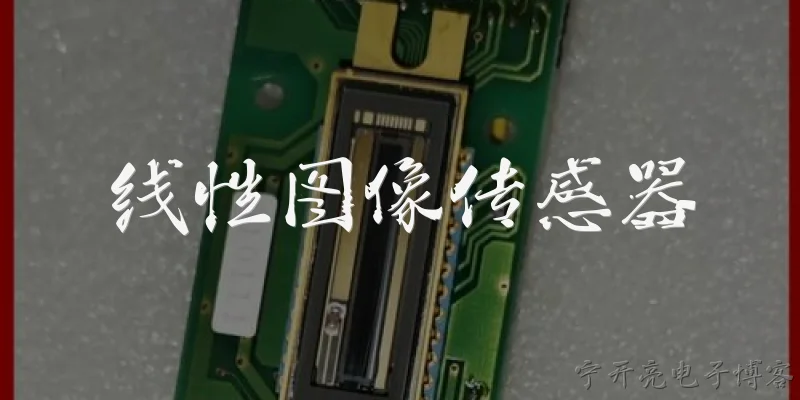
A: A linear image sensor is a type of photoelectric device that captures visual information along a single line or row of pixels, rather than a two-dimensional area. Unlike area sensors used in typical cameras, it consists of a one-dimensional array of photodiodes or CCD elements. During operation, light falling on each pixel generates an electrical charge proportional to the intensity. These charges are then read out sequentially and converted into digital signals. To capture a full 2D image, the sensor or the object must move relative to each other, a process known as scanning. This design makes linear sensors ideal for applications requiring high resolution and uniformity, such as document scanners, barcode readers, and industrial inspection systems where one dimension is continuous.
Q: What are the primary applications of linear image sensors?
A: Linear image sensors are widely used in applications that involve scanning or measuring along a single axis. Common examples include flatbed and sheet-fed document scanners, where the sensor moves across a stationary page to capture high-resolution text and images. Barcode scanners use linear sensors to read 1D barcodes by detecting variations in reflected light. In industrial settings, they are employed for automated optical inspection (AOI) to detect defects on continuous materials like paper, textiles, or metal sheets. Other applications include spectroscopy, where they measure light intensity across different wavelengths, and in digital radiography for medical imaging. Their ability to provide high pixel density and uniform response makes them preferred over area sensors when the object or sensor moves in one direction.
Q: What are the advantages of linear image sensors over area image sensors?
A: Linear image sensors offer several advantages over area sensors. First, they provide higher resolution per unit length because all pixels are dedicated to a single line, enabling finer detail capture. Second, they are more cost-effective for scanning applications since they require fewer pixels than a full 2D array. Third, they exhibit greater uniformity and less geometric distortion because there are no cross-talk issues between rows. Fourth, they have simpler readout electronics and can achieve higher line rates for fast scanning. Finally, for applications involving continuous motion, such as conveyor belt inspection, linear sensors eliminate the need for complex optics to focus a 2D field, reducing system complexity and cost. These factors make them ideal for high-precision, one-dimensional measurement tasks.
Q: How do you choose the right linear image sensor for a specific application?
A: Selecting the right linear image sensor depends on several key parameters. First, consider resolution—the number of pixels—which determines the smallest detectable feature. Higher pixel counts are needed for fine detail. Second, evaluate pixel size and sensitivity; smaller pixels offer higher resolution but may require more light. Third, check the sensor type: CCD vs. CMOS. CCDs generally offer lower noise and higher uniformity, while CMOS provides faster readout and lower power. Fourth, assess the spectral response to match the light source (e.g., visible, UV, IR). Fifth, consider the line rate, which must match the speed of the moving object. Finally, factor in interface options (e.g., Camera Link, USB) and environmental conditions. Balancing these factors ensures optimal performance for your scanning or inspection task.
Dialogue about
Common scenarios of "Linear Image Sensor"
【Customer】 Hi, I'm looking for a linear image sensor for a document scanner project. Can you help me understand the options?
【Sales Engineer】 Absolutely! Linear image sensors are ideal for scanners. We have CCD and CMOS types. What resolution and speed do you need?
【Customer】 We need at least 600 dpi and scan speed around 30 pages per minute. Color scanning is required.
【Sales Engineer】 For 600 dpi color, a 3-line CCD sensor with 7500 pixels per line would work. Our model LS-7500C offers that. It supports up to 40 ppm.
【Customer】 What about CMOS? I've heard they are more power-efficient and cheaper.
【Sales Engineer】 Yes, CMOS linear sensors like our CL-6000 are cost-effective and low power. But for high-quality color scanning, CCD still has better sensitivity and lower noise.
【Customer】 Our budget is tight. Can the CMOS handle 600 dpi color at 30 ppm?
【Sales Engineer】 The CL-6000 can do 600 dpi color at 30 ppm with proper illumination. It has 6000 pixels and 3 lines (RGB). Power consumption is only 150 mW.
【Customer】 That sounds promising. What about interface? We prefer LVDS.
【Sales Engineer】 The CL-6000 supports LVDS output. It also has a built-in timing generator, making integration easier.
【Customer】 How about dynamic range and sensitivity? We scan various documents, some with faint text.
【Sales Engineer】 The CL-6000 has a dynamic range of 60 dB and sensitivity of 10 V/lux·s. For faint text, you might need adjustable exposure. It supports that via SPI.
【Customer】 What's the pixel size and array length? We need to fit a specific optical path.
【Sales Engineer】 Pixel size is 7 µm x 7 µm, and the total array length is 42 mm. The package is a standard 22-pin ceramic DIP.
【Customer】 Can you provide a datasheet and evaluation kit?
【Sales Engineer】 Of course. I'll send the datasheet and info on our evaluation kit, which includes a USB interface board and software.
【Customer】 What about lead time and pricing for 1000 units?
【Sales Engineer】 Lead time is 8 weeks. For 1000 units, the price is $12.50 each. We can offer a discount for higher volumes.
【Customer】 That's within our budget. Let's proceed with a sample order of 10 units.
【Sales Engineer】 Great! I'll send you a quote and the sample order form. You should receive them within the hour.