Structure of Resistive Sensors:What is the basic structure of a resistive sensor?
Q: What is the basic structure of a resistive sensor?
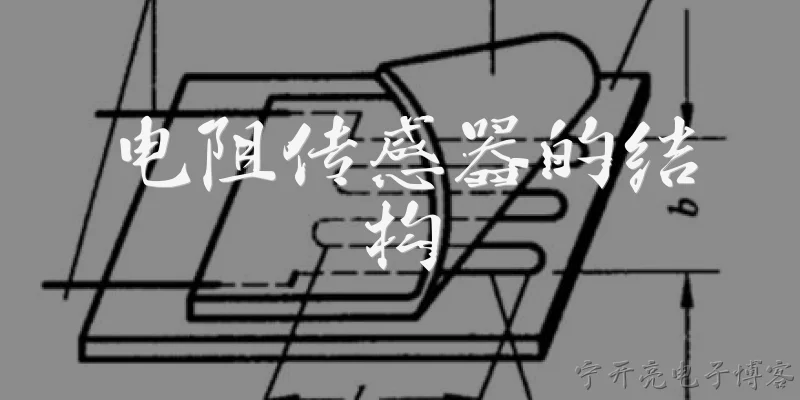
A: The basic structure of a resistive sensor consists of a resistive element whose electrical resistance changes in response to an external physical stimulus such as temperature, strain, light, or gas concentration. This resistive element is typically made from materials like metals (e.g., platinum for RTDs), semiconductors (e.g., thermistors), or conductive polymers. It is often deposited as a thin film or wire on a substrate, which provides mechanical support and electrical insulation. Two or more electrical contacts (electrodes) are attached to the ends of the resistive element to connect it to an external circuit. In many designs, an encapsulation layer protects the sensor from environmental damage while allowing the stimulus to reach the active material. The overall structure can be as simple as a two-terminal device or as complex as a multi-layer microelectromechanical system (MEMS) with additional components like heaters or reference resistors. The key principle is that any change in the measured quantity alters the resistance, which is then converted into an electrical signal (voltage or current) for further processing. Thus, the fundamental structure comprises a stimulus-sensitive resistor, electrodes, a substrate, and often a protective coating.
Q: How do the materials and layers in a resistive sensor affect its performance?
A: The materials and layering in a resistive sensor directly influence its sensitivity, accuracy, stability, and response time. The active resistive material determines the fundamental transduction mechanism: for example, a platinum film offers high linearity and wide temperature range for RTDs, while a metal oxide semiconductor provides high sensitivity but lower linearity for gas sensors. The substrate material affects thermal expansion matching and heat dissipation—ceramic substrates like alumina are common for high-temperature sensors, whereas flexible polymers are used for wearable strain sensors. Electrode materials must have low contact resistance and good adhesion to the resistive layer; gold or silver is often chosen for corrosion resistance. Additional layers, such as passivation or encapsulation, protect the sensor from humidity, chemicals, or mechanical damage but can also slow down the response if too thick. Furthermore, the geometry (thickness, width, length) of the resistive element sets the baseline resistance and sensitivity; thinner films generally yield higher sensitivity but may suffer from higher noise. Therefore, optimizing the material stack and layer thicknesses is crucial to balance performance trade-offs for a given application.
Q: What are the common configurations of resistive sensor structures?
A: Resistive sensors are commonly configured in several structural arrangements depending on the application and required accuracy. The simplest is the two-terminal configuration, where the resistive element is connected directly to a measurement circuit; this is used in many thermistors and strain gauges. To compensate for temperature drift or improve sensitivity, a three-terminal configuration (e.g., a potentiometer or a resistive divider) is often employed. A more advanced structure is the four-terminal (Kelvin) connection, which eliminates the effect of lead and contact resistance, making it ideal for precision measurements in low-resistance sensors like metal RTDs. Another common configuration is the Wheatstone bridge, which arranges four resistive elements (one or more being the active sensor) in a diamond shape to convert small resistance changes into a voltage output with high sensitivity and temperature compensation. In MEMS-based sensors, the resistive element can be integrated into a diaphragm or cantilever structure, forming a micro-scale device. Additionally, some resistive sensors use a meander or serpentine pattern to increase the effective length within a small area, enhancing resistance and sensitivity. Each configuration offers distinct advantages in terms of simplicity, accuracy, and noise immunity, so selection depends on the specific measurement needs.
Dialogue about
Common scenarios of "Structure of Resistive Sensors"
【Professor】 Today we'll discuss the structure of resistive sensors. Can anyone tell me what the basic components are?
【Student】 A resistive sensor typically consists of a sensing element, electrodes, and a substrate.
【Professor】 Exactly. The sensing element changes its resistance in response to a physical stimulus. What materials are commonly used for the sensing element?
【Student】 Materials like conductive polymers, metal oxides, and carbon-based materials are often used.
【Professor】 Good. Now, let's talk about electrodes. What role do they play?
【Student】 Electrodes provide electrical connections to the sensing element, allowing measurement of resistance changes.
【Professor】 Right. And the substrate?
【Student】 The substrate provides mechanical support and sometimes influences the sensor's properties, like flexibility.
【Professor】 Yes. There are different configurations: can you name a few?
【Student】 There are planar structures, where the sensing film is deposited on a flat substrate, and three-dimensional structures like those in some gas sensors.
【Professor】 Correct. Also, some sensors use interdigitated electrodes to increase the contact area. Why is that beneficial?
【Student】 It enhances sensitivity by providing more contact points for the sensing material.
【Professor】 Exactly. Now, consider the packaging. How does it affect the sensor's performance?
【Student】 Packaging protects the sensor from environmental damage and can also affect its response time and selectivity.
【Professor】 Good point. Let's summarize: structure includes sensing element, electrodes, substrate, and packaging. Any questions?
【Student】 What about the thickness of the sensing element? Does it matter?
【Professor】 Yes, thickness can affect sensitivity and response time. Thinner films often respond faster but may have lower stability.
【Student】 I see. So the design must balance these factors.
【Professor】 Absolutely. Next time, we'll discuss how to characterize these sensors. Class dismissed.
【Student】 Thank you, Professor!