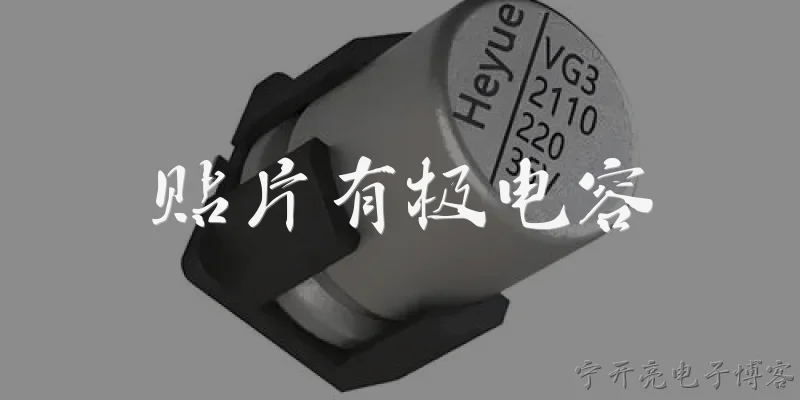
Capacitance Testing of Capacitors:What is capacitance testing and why is it important for capacitors?
Q: What is capacitance testing and why is it important for capacitors?
A: Capacitance testing measures a capacitor's ability to store electrical charge, typically expressed in farads. It is crucial because capacitors are used in filtering, coupling, and energy storage, and their performance can degrade over time due to aging, temperature, or voltage stress. Testing verifies whether the capacitance is within tolerance, ensuring circuit reliability. It also helps detect open or short circuits, leakage, and dielectric absorption. Without proper testing, faulty capacitors can cause power supply failures, signal distortion, or even safety hazards. Common methods include using an LCR meter, capacitance bridge, or dedicated tester. Regular testing is essential in maintenance schedules for industrial equipment, automotive electronics, and consumer devices to prevent unexpected breakdowns.
Q: What are the common methods for testing capacitor capacitance?
A: The most common methods include using an LCR meter, which applies an AC signal and measures impedance to derive capacitance. A capacitance bridge offers high accuracy by balancing the impedance of the capacitor against known standards. Simple multimeters with capacitance mode are convenient for quick checks but less precise. For electrolytic capacitors, an ESR (equivalent series resistance) meter is often used alongside capacitance measurement. Another method is the charge-discharge time constant method, where the capacitor is charged through a resistor and the time to reach a certain voltage is measured. Additionally, oscilloscope-based techniques can analyze capacitance by observing phase shifts. Each method has trade-offs in accuracy, cost, and suitability for different capacitor types, so selecting the right one depends on the application and required precision.
Q: How do you perform a capacitance test on a capacitor in a circuit?
A: To test a capacitor in-circuit, first ensure the circuit is powered off and the capacitor is discharged using a resistor to avoid damage or shock. Then, use an LCR meter or capacitance meter set to the appropriate range. Connect the test leads across the capacitor terminals, observing polarity for electrolytic types. In-circuit testing can be affected by parallel components, so if readings are inaccurate, desolder one lead and retest. For accurate results, consider the test frequency: capacitance often varies with frequency, so use a frequency close to the actual operating condition. Also, note that some meters apply a DC bias, which can affect electrolytic capacitors. Always compare the measured value to the rated capacitance and tolerance. If the reading is significantly low or high, the capacitor may be faulty and should be replaced.
Q: What factors can affect capacitance testing accuracy and how can they be mitigated?
A: Several factors affect accuracy: temperature, test frequency, dielectric absorption, and lead impedance. Temperature changes can alter capacitance, especially in electrolytic capacitors, so testing at or near operating temperature is best. Test frequency should match the application, as capacitance decreases with higher frequencies for many dielectrics. Dielectric absorption causes the capacitor to retain charge, leading to errors; this can be mitigated by discharging thoroughly before testing. Lead inductance and resistance can affect high-frequency measurements, so keep leads short and use proper shielding. For electrolytic capacitors, ESR can dominate, so separate ESR measurement is advised. Also, ensure the meter is calibrated and the capacitor is within its voltage rating. Using a guard ring or shielded test fixture can reduce stray capacitance. Finally, average multiple readings to minimize random errors.
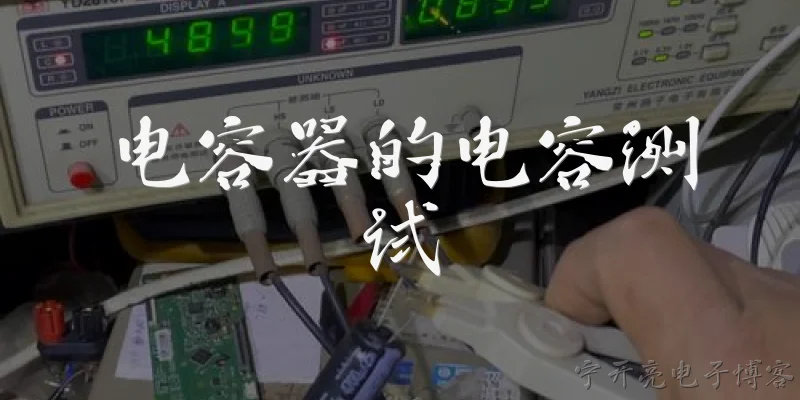
Words of experience
Common scenarios of "Capacitance Testing of Capacitors"
【Engineer】 Hi, I'm testing a batch of capacitors and need to verify their capacitance. Can you guide me through the process?
【Technician】 Sure! First, make sure you have a capacitance meter or an LCR meter. Do you have one?
【Engineer】 Yes, I have an LCR meter. Should I discharge the capacitors before testing?
【Technician】 Absolutely. Always discharge them using a resistor to avoid damage to the meter and ensure safety.
【Engineer】 Got it. I'll use a 1kΩ resistor. How do I connect the capacitor to the meter?
【Technician】 Connect the meter's test leads to the capacitor terminals. If it's polarized, make sure the positive lead goes to the positive terminal.
【Engineer】 This one is polarized. I'll observe the polarity. What settings should I use on the LCR meter?
【Technician】 Set it to measure capacitance (C). Choose a test frequency that matches the capacitor's typical operating frequency. For electrolytics, 100 Hz or 120 Hz is common.
【Engineer】 I'll set it to 100 Hz. The meter is showing a reading. Should I wait for it to stabilize?
【Technician】 Yes, give it a few seconds. The reading should stabilize. Also, ensure the capacitor is not connected to any other circuit.
【Engineer】 It's isolated. The reading is 47.2 µF. The capacitor is labeled 47 µF. Is that within tolerance?
【Technician】 Typically, electrolytic capacitors have a tolerance of ±20%. So 47 µF ±20% is about 37.6 to 56.4 µF. Your reading is well within that.
【Engineer】 Great. What about ESR? Should I check that too?
【Technician】 Yes, ESR (Equivalent Series Resistance) is important for electrolytics. Many LCR meters can measure it. A high ESR indicates a bad capacitor.
【Engineer】 My meter has an ESR mode. What's a typical acceptable ESR for a 47 µF capacitor?
【Technician】 It depends on the voltage and type. For a 47 µF, 25V electrolytic, ESR might be a few ohms. Check the datasheet for the specific capacitor.
【Engineer】 I don't have the datasheet. Is there a general rule?
【Technician】 Generally, for small electrolytics, ESR should be less than 10 ohms. If it's higher, replace it.
【Engineer】 I measured ESR at 2.5 ohms. That seems fine. Any other tests?
【Technician】 You could also check leakage current, but for most applications, capacitance and ESR are sufficient. If both are good, the capacitor is likely fine.