SMD polarized capacitor:What is an SMD polarized capacitor?
Q: What is an SMD polarized capacitor?
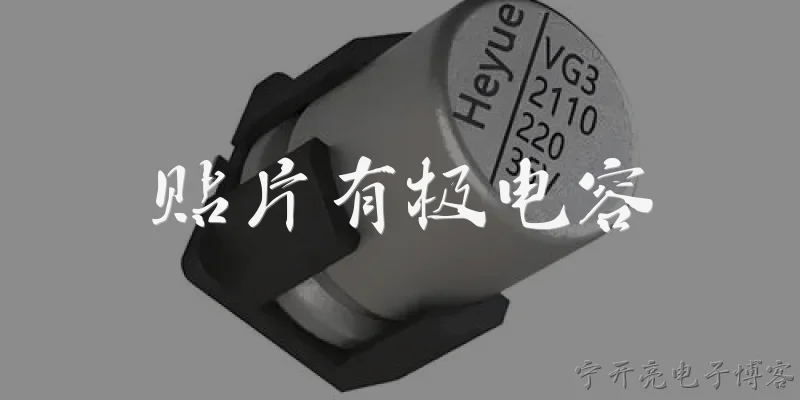
A: An SMD polarized capacitor is a surface-mount device capacitor that has a positive and negative terminal, meaning it must be connected with correct polarity. Common types include tantalum, aluminum electrolytic, and niobium capacitors. They are widely used in compact electronic circuits for filtering, decoupling, and energy storage. Because of their polarization, reverse voltage can damage the capacitor or cause failure. They typically feature a marked terminal, such as a stripe or notch, to indicate the positive or negative side. Their small size and high capacitance make them ideal for modern PCB assemblies.
Q: How do you identify the polarity of an SMD polarized capacitor?
A: Polarity on an SMD polarized capacitor is usually marked on the body. For tantalum capacitors, a stripe or a plus sign often indicates the positive terminal, while the opposite end is negative. For aluminum electrolytic SMD capacitors, a black or colored mark on the base typically indicates the negative terminal. Some devices use a beveled edge or a notch to show the positive side. Always consult the manufacturer's datasheet because marking conventions can vary. Installing the capacitor backward can lead to short circuits, leaking, or even fire. Use a multimeter or magnifier if markings are unclear.
Q: What are the common applications of SMD polarized capacitors?
A: SMD polarized capacitors are used in a wide range of electronic devices where space is limited. They are common in power supply circuits for input and output filtering, helping to smooth voltage ripples. In digital circuits, they serve as decoupling capacitors to stabilize power to ICs. They are also found in audio equipment, communication devices, and portable electronics like smartphones and laptops. Because they offer high capacitance in a small package, they are preferred for DC-DC converters and battery management systems. Their polarized nature makes them suitable for DC circuits but not for AC signal coupling unless biased correctly.
Q: What happens if you install an SMD polarized capacitor backwards?
A: Installing an SMD polarized capacitor backwards can cause serious problems. Reverse polarity can break down the dielectric oxide layer, leading to excessive leakage current, heating, and eventual short circuit. In tantalum capacitors, this can result in a thermal runaway and even fire or explosion. Aluminum electrolytic capacitors may vent or bulge, releasing electrolyte and damaging the PCB. The capacitor may fail immediately or degrade over time, affecting circuit performance. To avoid this, always verify the polarity markings on the capacitor and the PCB silkscreen before soldering. Using a multimeter to check continuity can also help confirm orientation.
Q: How do you choose the right SMD polarized capacitor for a design?
A: Choosing the right SMD polarized capacitor involves several key parameters. First, determine the required capacitance and voltage rating; the voltage rating should be at least 20% higher than the circuit's maximum voltage. Consider the equivalent series resistance (ESR) and ripple current for power applications. Tantalum capacitors offer stable performance but can fail short; aluminum electrolytic provide higher capacitance but larger size. Check the temperature coefficient and operating temperature range. Also, account for size constraints and PCB layout. Finally, review reliability data and cost. Always consult the datasheet to ensure the capacitor meets your application's electrical and environmental requirements.
Words of experience
Common scenarios of "SMD polarized capacitor"
【Engineer】 Hey, I'm working on a new PCB design and I need to choose capacitors. I've heard about SMD polarized capacitors. Can you explain what they are?
【Expert】 Sure! SMD polarized capacitors are surface-mount devices that have a positive and negative terminal, meaning they must be connected with correct polarity in a circuit. Common types include tantalum and aluminum electrolytic capacitors.
【Engineer】 I see. So how do they differ from non-polarized SMD capacitors like ceramic ones?
【Expert】 Non-polarized capacitors like ceramics can be connected either way, while polarized ones cannot. Polarized capacitors typically offer higher capacitance values in a smaller package, but they are sensitive to reverse voltage.
【Engineer】 What happens if I connect a polarized capacitor backwards?
【Expert】 Reverse voltage can cause the capacitor to fail, potentially short-circuit, leak, or even explode. So it's critical to observe polarity markings, usually a stripe or a '+' sign on the body.
【Engineer】 Got it. What are the typical applications for SMD polarized capacitors?
【Expert】 They are often used in power supply filtering, decoupling, and energy storage where high capacitance is needed. Tantalum capacitors are common in compact devices like smartphones and laptops.
【Engineer】 Are there any specific design considerations when using them?
【Expert】 Yes, you need to consider voltage derating, ripple current, and temperature effects. Tantalum capacitors, for example, should be derated by 50% or more to avoid failure.
【Engineer】 What about the ESR and ESL? Do they matter?
【Expert】 Absolutely. Equivalent Series Resistance (ESR) and Equivalent Series Inductance (ESL) affect performance, especially in high-frequency circuits. Lower ESR is generally better for filtering.
【Engineer】 How do I choose between tantalum and aluminum electrolytic SMD capacitors?
【Expert】 Tantalum capacitors have higher capacitance per volume and better stability, but they can fail short. Aluminum electrolytics are cheaper and handle higher voltages, but they are larger and have higher ESR.
【Engineer】 Can you recommend some manufacturers for SMD polarized capacitors?
【Expert】 Sure, companies like KEMET, AVX, Panasonic, and Vishay are well-known for quality SMD capacitors. Always check datasheets and reliability reports.
【Engineer】 What about soldering? Any special precautions?
【Expert】 Yes, follow the recommended soldering profile to avoid thermal stress. Also, avoid excessive mechanical stress on the terminals, as it can crack the capacitor.
【Engineer】 Thanks! That's very helpful. I'll keep all this in mind for my design.
【Expert】 You're welcome! If you have more questions, feel free to ask. Good luck with your PCB design!