DMM module:What is a DMM module?
Q: What is a DMM module?
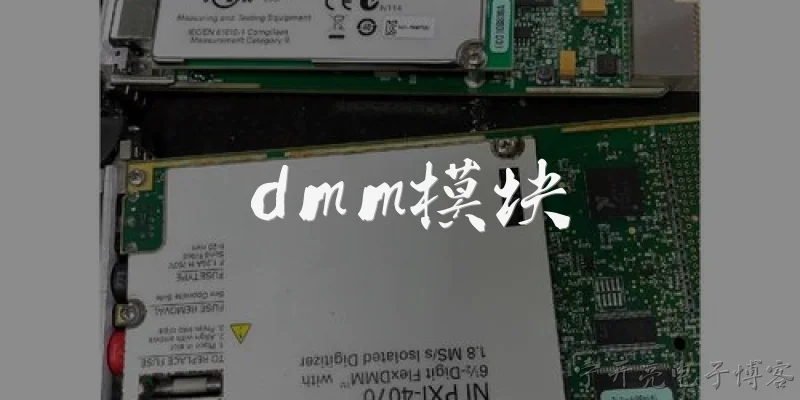
A: A DMM module, or Digital Multimeter module, is an electronic instrument module used to measure electrical parameters such as voltage, current, and resistance. Unlike handheld multimeters, a DMM module is typically designed for integration into automated test systems, data acquisition setups, or modular instrument platforms like PXI or VXI. It provides digital readouts and often includes communication interfaces for remote control. Key specifications include resolution, accuracy, sampling rate, and measurement ranges. DMM modules are widely used in manufacturing test, laboratory research, and field service where precise, repeatable electrical measurements are required.
Q: How does a DMM module differ from a traditional digital multimeter?
A: A traditional digital multimeter is a standalone, handheld or benchtop device with its own display and controls. A DMM module, by contrast, lacks a built-in display and is designed to be plugged into a chassis or connected to a computer. It relies on software for control and data visualization, making it suitable for automated testing and multi-channel systems. DMM modules often offer higher speed, tighter synchronization with other instruments, and compact form factors. They are ideal for applications requiring high throughput or remote operation, whereas traditional DMMs excel in convenience and portability for manual measurements.
Q: What are the common applications of DMM modules?
A: DMM modules are commonly used in automated test equipment (ATE) for production testing of electronic components, circuit boards, and devices. They are also essential in data acquisition systems for monitoring voltage, current, and resistance in industrial processes and environmental sensors. In research and development, DMM modules enable precise, repeatable measurements in experiments involving material characterization or battery testing. Other applications include calibration labs, aerospace and defense testing, and medical device verification. Their ability to be controlled via software and integrated into larger test systems makes them versatile for any scenario demanding accurate electrical measurements at scale.
Q: What are the key specifications to consider when selecting a DMM module?
A: When selecting a DMM module, consider resolution (digits), accuracy, and measurement ranges for voltage, current, and resistance. Sampling rate determines how fast readings are taken, which is critical for dynamic signals. Also evaluate input impedance, which affects measurement loading, and common-mode rejection ratio for noise immunity. Interface options like USB, Ethernet, or PXI are important for system integration. Additional factors include channel count for multiplexed measurements, trigger capabilities for synchronization, and calibration requirements. Budget and physical size also matter. Matching these specs to your application ensures reliable and efficient performance.
Q: How do you integrate a DMM module into an automated test system?
A: Integrating a DMM module into an automated test system involves several steps. First, install the module in a compatible chassis or connect it to your computer via the appropriate interface (e.g., USB, LAN, PXI). Next, install the necessary drivers and software, such as IVI drivers or vendor-specific APIs. Then, configure the module’s measurement settings through software, including function, range, and resolution. Use a programming environment like LabVIEW, Python, or C# to send commands and read data. Finally, synchronize the DMM with other instruments using triggers or shared clocks to ensure coordinated measurements. Proper cabling and shielding are essential to minimize noise and maintain accuracy.
Dialogue about
Common scenarios of "DMM module"
【Engineer】 Hey, I've been hearing about DMM modules a lot lately. Can you explain what they are?
【Technician】 Sure! DMM stands for Digital Multimeter Module. It's essentially a compact device that can measure voltage, current, and resistance, and sometimes more, like capacitance or frequency.
【Engineer】 So it's like a multimeter but in module form? For what kind of applications?
【Technician】 Exactly. These modules are often used in automated test systems, data acquisition, and embedded systems where you need to integrate measurement capabilities directly into a larger setup.
【Engineer】 That makes sense. What are the key specifications I should look for when choosing a DMM module?
【Technician】 Resolution, accuracy, speed, and range are crucial. Also, consider the interface—whether it's USB, Ethernet, or something like PXI. And of course, the number of channels if you need to measure multiple points.
【Engineer】 I see. How does resolution affect measurements?
【Technician】 Resolution is the smallest change the module can detect. A higher resolution, like 6.5 digits, allows you to see smaller variations in your signal, which is important for precise measurements.
【Engineer】 Got it. What about speed? I assume faster is better, but does that come at a cost?
【Technician】 Yes, there's often a trade-off between speed and accuracy. Higher speed might mean lower resolution or more noise. You need to balance based on your application's requirements.
【Engineer】 Are there any common issues or pitfalls when using DMM modules?
【Technician】 One common issue is ground loops, which can introduce noise. Also, improper shielding and cabling can affect accuracy. And don't forget calibration—regular calibration is essential to maintain accuracy.
【Engineer】 How often should calibration be done?
【Technician】 Typically annually, but it depends on the manufacturer's recommendation and how critical your measurements are. Some high-precision applications might require more frequent calibration.
【Engineer】 Can you recommend some popular DMM module brands or models?
【Technician】 Sure, Keysight, National Instruments, and Fluke are well-known. For example, Keysight's DAQ970A or NI's PXIe-4081 are popular choices. But the best one depends on your specific needs.
【Engineer】 Thanks, that's very helpful. I'll look into those. One last thing: how do DMM modules compare to traditional benchtop multimeters?
【Technician】 Benchtop multimeters are standalone and often have better accuracy and features, but DMM modules are more compact and can be integrated into automated systems for multiple measurements. It's about convenience and scalability.
【Engineer】 Makes sense. I appreciate your insights!
【Technician】 No problem! Let me know if you have more questions as you explore options.