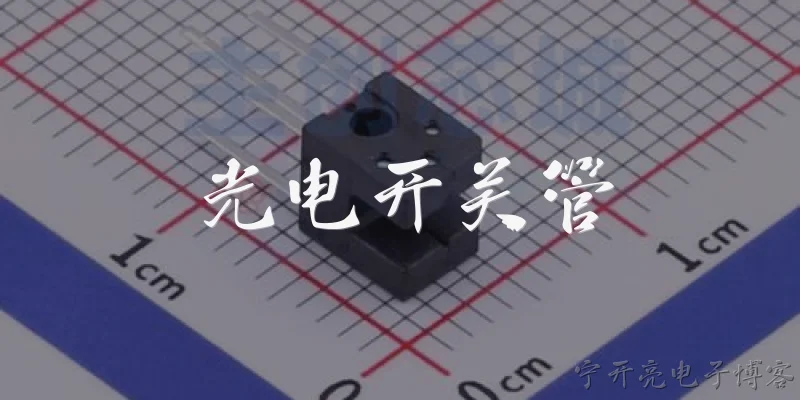
Photoelectric switch tube:What is a photoelectric switch tube and how does it operate?
Q: What is a photoelectric switch tube and how does it operate?
A: A photoelectric switch tube, often called a photoelectric sensor or photoelectric switch, is a device that uses light to detect the presence or absence of an object. It consists of a light emitter (e.g., LED or laser diode) and a photodetector (e.g., phototransistor or photodiode). When the light beam is interrupted or reflected by an object, the photodetector changes its electrical output, triggering a switching action. According to the International Electrotechnical Commission (IEC 60947-5-2), these devices are classified as proximity switches and are widely used in automation for position sensing, counting, and safety interlocking.
Q: What are the main types of photoelectric switch tubes?
A: Photoelectric switch tubes are primarily categorized into three types: through-beam, retro-reflective, and diffuse-reflective. Through-beam sensors have separate emitter and receiver units, offering the longest sensing range and highest reliability. Retro-reflective sensors combine emitter and receiver in one housing and use a reflector to return the beam. Diffuse-reflective sensors rely on light reflected from the target object itself. The National Electrical Manufacturers Association (NEMA ICS 2-2000) standard defines these classifications and their typical applications in industrial control systems, including packaging, material handling, and security systems.
Q: What are the key technical parameters of a photoelectric switch tube?
A: Key parameters include sensing range, light source (infrared, red, or laser), output type (NPN, PNP, or relay), response time, supply voltage (typically 10–30 VDC), and environmental rating (IP level). The sensing range depends on the mode: through-beam can reach up to 100 meters, retro-reflective up to 10 meters, and diffuse-reflective up to 2 meters. Response time is often in the millisecond range. According to IEC 60947-5-2, manufacturers must specify these parameters to ensure compatibility and safety in industrial environments. Proper selection ensures reliable operation under varying conditions such as dust, moisture, and temperature.
Q: What are the common applications of photoelectric switch tubes in industry?
A: Photoelectric switch tubes are essential in industrial automation for object detection, counting, positioning, and safety. They are used in conveyor systems to detect packages, in assembly lines to verify part presence, in doors and gates for presence sensing, and in printing machines for edge detection. The International Society of Automation (ISA) reports that photoelectric sensors are among the most widely used sensors in factory automation due to their non-contact operation and high speed. They also play a critical role in safety circuits, such as light curtains, to protect operators from hazardous machinery, as mandated by ISO 13849-1.
Q: How do you select and install a photoelectric switch tube correctly?
A: Selection depends on sensing distance, object material, color, and environmental conditions. For long-range or dirty environments, through-beam sensors are preferred; for space-limited areas, diffuse-reflective types are suitable. Installation must avoid direct sunlight, reflective backgrounds, and vibration. Alignment is critical for through-beam and retro-reflective types. According to the Occupational Safety and Health Administration (OSHA 1910.212), proper wiring and grounding are essential to prevent electrical noise and ensure safety. Manufacturers' guidelines, such as those from Rockwell Automation or Omron, provide detailed mounting and wiring instructions to achieve optimal performance and longevity.
Dialogue about
Common scenarios of "Photoelectric switch tube"
【Engineer】 Hi, I'm working on a new circuit design and I need to understand photoelectric switch tubes better. Can you explain what they are?
【Expert】 Sure! A photoelectric switch tube is a type of optoelectronic device that uses light to control the flow of current. It typically consists of a light emitter and a light receiver, like in an optocoupler. When light is emitted and hits the receiver, it allows current to flow, effectively acting as a switch.
【Engineer】 So it's like a relay but with light instead of mechanical contacts?
【Expert】 Exactly! It provides electrical isolation between the input and output, just like a relay, but with no moving parts, so it's faster and more reliable. There are different types, like phototransistors, photodiodes, and photothyristors.
【Engineer】 What are the typical applications for these?
【Expert】 They're used in many places where isolation is needed: in power supplies for feedback control, in microcontroller interfaces to drive high-voltage loads, in medical equipment for patient safety, and in automotive systems, among others.
【Engineer】 I see. How do I choose the right one for my application?
【Expert】 You need to consider parameters like input current, output voltage and current ratings, switching speed, isolation voltage, and the type of output (transistor, SCR, etc.). Also, consider the current transfer ratio (CTR) for phototransistor types.
【Engineer】 What is CTR?
【Expert】 CTR is the ratio of the output collector current to the input LED forward current, expressed as a percentage. It indicates how efficiently the device transfers current from input to output. Higher CTR means less input current needed for a given output current.
【Engineer】 Are there any limitations or drawbacks?
【Expert】 Yes, they can be slower than some other switching devices, and CTR can degrade over time and with temperature. They also have limited output current capability, so for high-power applications, you might need to use them to drive a larger transistor or relay.
【Engineer】 How do they compare to solid-state relays (SSRs)?
【Expert】 SSRs often use photoelectric switch tubes internally. So, an SSR is essentially a complete module that includes the photoelectric switch tube plus additional circuitry for driving and protection. If you need a ready-to-use solution, an SSR might be easier, but for custom designs, using a photoelectric switch tube gives you more flexibility.
【Engineer】 Can you give an example of a circuit using a photoelectric switch tube?
【Expert】 Sure. A common example is using a phototransistor optocoupler to interface a microcontroller to a higher voltage circuit. The microcontroller drives the LED through a resistor, and the phototransistor's collector-emitter circuit switches the higher voltage load. You'd need a pull-up resistor on the output side.
【Engineer】 What about safety considerations?
【Expert】 Always respect the isolation voltage rating; don't exceed it. Also, ensure proper creepage and clearance distances on the PCB. If switching inductive loads, use a flyback diode to protect the output transistor.
【Engineer】 Thanks, that's very helpful. I think I have a better idea now.
【Expert】 You're welcome! If you have more specific questions as you design, feel free to ask.