How to detect harmful gases:How can you detect harmful gases in the workplace?
Q: How can you detect harmful gases in the workplace?
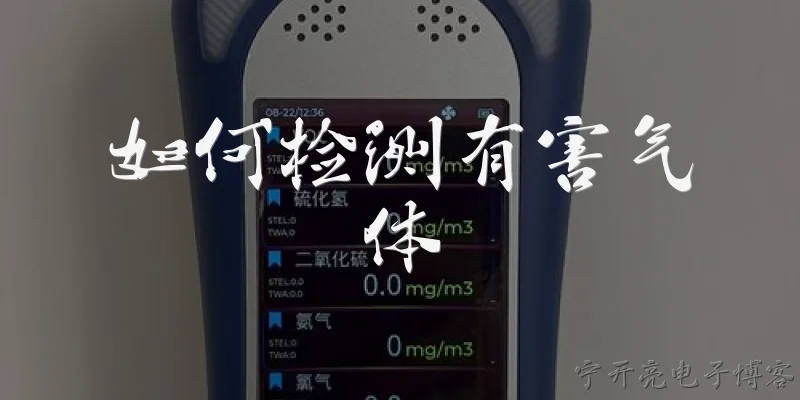
A: Detecting harmful gases in the workplace typically relies on a combination of fixed and portable detection technologies tailored to the specific risks present. Fixed gas detection systems are installed in areas where leaks or accumulation are likely, such as near storage tanks, pipelines, or confined spaces. These systems use sensors such as electrochemical cells for toxic gases like carbon monoxide or hydrogen sulfide, catalytic bead or infrared sensors for flammable gases, and photoionization detectors (PIDs) for volatile organic compounds. They trigger alarms and can automate ventilation or shutdown procedures. Portable detectors, including personal gas monitors and handheld instruments, allow workers to check atmospheres before entry and continuously monitor during tasks. Colorimetric tubes offer a low-cost spot-check method for specific gases. Beyond instruments, proper risk assessment is essential: identify which gases could be present, understand their properties, and place sensors accordingly. Regular calibration, bump testing, and maintenance ensure accuracy. Training workers to recognize alarm signals and evacuation procedures complements the technical systems, creating a layered safety approach.
Q: What sensor technologies are used to detect harmful gases?
A: Several sensor technologies are used to detect harmful gases, each suited to different gas types and conditions. Electrochemical sensors are common for toxic gases such as carbon monoxide, hydrogen sulfide, and chlorine; they produce a current proportional to gas concentration and are sensitive at low levels. Catalytic bead sensors detect flammable gases by measuring heat generated during combustion on a catalyst, though they require oxygen and can be poisoned by certain compounds. Infrared sensors measure absorption of infrared light at specific wavelengths, making them reliable for flammable gases like methane and carbon dioxide without requiring oxygen. Photoionization detectors (PIDs) use ultraviolet light to ionize volatile organic compounds, ideal for screening total VOC levels. Semiconductor or metal-oxide sensors are inexpensive and sensitive but can be less selective and affected by humidity. Colorimetric techniques, including detector tubes and paper badges, change color upon reaction with a target gas. Paper tape and optical sensors offer continuous monitoring for specific gases. Selecting the right sensor depends on the target gas, concentration range, environmental conditions, response time, and cross-sensitivity considerations. Regular calibration and maintenance are critical for reliable performance.
Q: What are the best practices for harmful gas detection and monitoring?
A: Effective harmful gas detection follows a systematic, layered approach. Start with a thorough risk assessment to identify which gases may be present, their sources, potential concentrations, and exposure limits. Select detection technology appropriate for each gas: electrochemical sensors for toxics, catalytic or infrared for flammables, and PIDs for VOCs. Position fixed detectors where gas is most likely to accumulate, considering gas density, ventilation patterns, and potential leak points; follow manufacturer and regulatory guidance for placement. Implement continuous monitoring with alarms set below occupational exposure limits and ensure alarms are audible and visible in noisy or high-risk areas. Use personal monitors for workers who move between areas or enter confined spaces, and always test atmospheres before entry. Maintain equipment rigorously: calibrate sensors at recommended intervals, perform bump tests before each use, and replace sensors as they age or become contaminated. Document all checks and keep records. Train personnel to interpret readings, respond to alarms, and follow evacuation or shutdown procedures. Integrate gas detection with other safety systems, such as ventilation controls and permit-to-work processes, and review procedures regularly to adapt to changing conditions.
Words of experience
Common scenarios of "How to detect harmful gases"
【Safety Engineer】 Morning, team. Today we're going to walk through how to detect harmful gases in industrial environments. First, what do we mean by 'harmful gases'?
【Trainee】 I'd say gases that can hurt people—like carbon monoxide, hydrogen sulfide, chlorine, ammonia. Some are toxic, some flammable, some both.
【Safety Engineer】 Exactly. So detection has two goals: protect health and prevent explosions. What's the first line of defense?
【Trainee】 Fixed gas detection systems? Sensors mounted in known risk areas that alarm continuously.
【Safety Engineer】 Right. What sensor technologies do fixed systems commonly use?
【Trainee】 Catalytic bead for flammable gases, electrochemical for toxic gases, and infrared for CO2 or hydrocarbons.
【Safety Engineer】 Good. And what about situations where fixed sensors aren't practical?
【Trainee】 Portable detectors—personal gas monitors clipped to a worker's belt, or handheld units for confined space entry.
【Safety Engineer】 Let's talk placement. If you're monitoring for hydrogen sulfide, where do you mount the sensor?
【Trainee】 H2S is heavier than air, so near the floor or low-lying areas—sumps, pits, trenches.
【Safety Engineer】 And for methane or hydrogen?
【Trainee】 Those are lighter than air, so mount high—near ceilings or roof vents.
【Safety Engineer】 Now, how do sensors actually convert gas concentration into a signal?
【Trainee】 Electrochemical sensors produce a current proportional to gas concentration. Catalytic sensors change resistance as gas burns on a bead.
【Safety Engineer】 What maintenance do these sensors need?
【Trainee】 Regular calibration with span gas, bump tests before each shift, and sensor replacement when they degrade.
【Safety Engineer】 Why is bump testing so important?
【Trainee】 Because a sensor can fail silently—it may read zero when it's actually blind. A bump test proves it responds to gas.
【Safety Engineer】 What alarm setpoints would you typically configure?
【Trainee】 Usually two levels: a low alarm at maybe 10% LEL or the TWA, and a high alarm at 20–25% LEL or the STEL, plus a separate danger level.
【Safety Engineer】 Good. Last question—what should you do the moment an alarm sounds?
【Trainee】 Stop work, evacuate upwind to the muster point, account for everyone, and never re-enter until the area is confirmed safe by a calibrated detector.
【Safety Engineer】 Perfect summary. Detection only works if people trust and respond to the alarms. That's our culture.