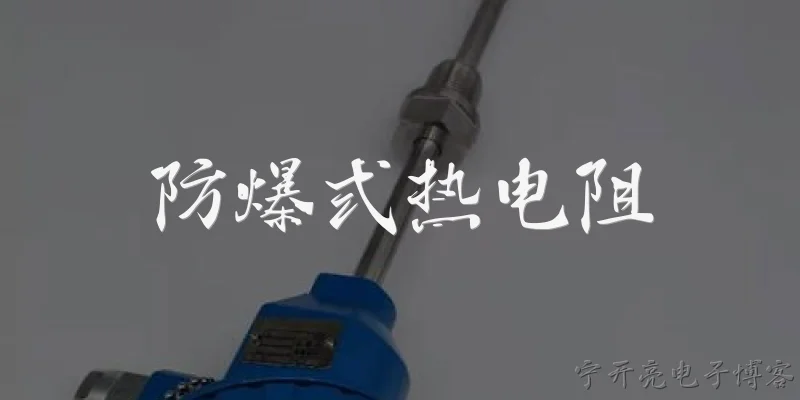
Explosion-proof thermal resistor:What is an explosion-proof thermal resistor and how does it work?
Q: What is an explosion-proof thermal resistor and how does it work?
A: An explosion-proof thermal resistor is a temperature sensor designed to operate safely in hazardous environments where flammable gases, vapors, or combustible dust may be present. It works on the principle that electrical resistance changes with temperature, typically using platinum, copper, or nickel elements. The key difference from a standard thermal resistor lies in its protective housing. The sensing element is enclosed in a robust, flameproof enclosure that can withstand an internal explosion without allowing flames or sparks to escape into the surrounding atmosphere. This enclosure is often made of cast aluminum or stainless steel and is sealed to prevent ingress of hazardous substances. When the resistor measures temperature, the resistance signal is transmitted through intrinsically safe circuits or isolated barriers to control systems. The design complies with standards such as ATEX, IECEx, or NEC, ensuring that even if a fault occurs, the device cannot ignite the external explosive atmosphere. Thus, it provides accurate temperature measurement while maintaining plant safety in oil and gas, chemical, and pharmaceutical industries.
Q: In which industrial applications are explosion-proof thermal resistors commonly used?
A: Explosion-proof thermal resistors are essential in industries where explosive atmospheres are a constant risk. Common applications include oil and gas extraction, refining, and petrochemical processing, where flammable hydrocarbons are present. They are used to monitor temperatures in reactors, distillation columns, storage tanks, and pipelines. In the chemical industry, they measure temperatures in reactors, dryers, and solvent recovery systems. Pharmaceutical manufacturing also relies on them for temperature control in explosive solvent environments. Additionally, they are found in paint and coating production, where volatile organic compounds create hazardous zones. Coal mines and grain handling facilities use them to monitor bearings, motors, and conveyor systems in dust-laden areas. Power plants, especially those handling natural gas or hydrogen, utilize them for turbine and boiler monitoring. Wastewater treatment plants with methane generation, and food processing where flammable dust or alcohol vapors exist, also benefit. In all these settings, the explosion-proof thermal resistor ensures accurate temperature readings without compromising safety, meeting strict regulatory requirements and preventing catastrophic accidents.
Q: What are the key selection criteria for choosing an explosion-proof thermal resistor?
A: Selecting the right explosion-proof thermal resistor involves several critical factors. First, determine the hazardous area classification: Zone 0, 1, or 2 for gases, or Zone 20, 21, or 22 for dust, as this dictates the required protection level (e.g., flameproof Ex d, intrinsic safety Ex ia). Second, consider the temperature range and accuracy needed for your process; typical platinum resistors offer -200°C to 600°C with high precision. Third, choose the appropriate resistance value (e.g., Pt100, Pt1000) and wiring configuration (2-, 3-, or 4-wire) to minimize lead resistance errors. Fourth, evaluate the process connection and housing material—stainless steel 316L is common for corrosive environments. Fifth, check the ingress protection rating (IP66/67) and certification standards (ATEX, IECEx, NEC, CSA). Sixth, assess response time and insertion length to match the application’s thermal dynamics. Finally, consider transmitter integration, local display, and calibration options. Proper selection ensures safety, reliability, and compliance with local regulations, while avoiding over-specification that increases cost.
Words of experience
Common scenarios of "Explosion-proof thermal resistor"
【Engineer】 Good morning. I'm having trouble with a temperature measurement in a hazardous area. Can you explain what an explosion-proof thermal resistor is?
【Sales】 Good morning! An explosion-proof thermal resistor is a temperature sensor designed to operate safely in explosive atmospheres. It's built with a flameproof enclosure that prevents internal explosions from escaping and igniting the surrounding environment.
【Engineer】 I see. What standards does it comply with?
【Sales】 Typically, it complies with ATEX, IECEx, and other local standards. For example, ATEX directive 2014/34/EU for equipment used in explosive atmospheres.
【Engineer】 What are the different types of protection available?
【Sales】 Common types include flameproof (Ex d), increased safety (Ex e), intrinsic safety (Ex i), and encapsulation (Ex m). The choice depends on the zone classification and the specific application.
【Engineer】 Which type is most suitable for a Zone 1 area with gases?
【Sales】 For Zone 1, flameproof (Ex d) or intrinsic safety (Ex i) are often used. Ex d is robust and can handle higher power, while Ex i is low-energy and safer for maintenance.
【Engineer】 What about the temperature range? Can it handle up to 400°C?
【Sales】 Yes, many models can measure up to 600°C or more, depending on the sheath material and insulation. For 400°C, a stainless steel or Inconel sheath with mineral insulation would be suitable.
【Engineer】 What about the response time? I need a fast response for a control loop.
【Sales】 Response time depends on the sheath diameter and tip style. A thin sheath (e.g., 3mm) with a exposed tip can have a response time of a few seconds, while a larger diameter with a grounded tip might be slower.
【Engineer】 How do I connect it to my control system? Do I need a transmitter?
【Sales】 You can connect directly with a 3-wire or 4-wire RTD configuration, but for long distances or noisy environments, a temperature transmitter is recommended. It converts the RTD signal to 4-20mA, which is more robust.
【Engineer】 Can the transmitter be integrated into the connection head?
【Sales】 Yes, many explosion-proof thermal resistors come with an integrated transmitter in the connection head, which must also be explosion-proof certified.
【Engineer】 What about the wiring? Do I need special cables?
【Sales】 For intrinsic safety, you need special cables with low capacitance and inductance, and often blue sheathing to indicate IS circuits. For flameproof, standard instrument cables are fine, but you must follow local wiring codes.
【Engineer】 What maintenance is required?
【Sales】 Regular inspection of the enclosure for corrosion or damage, checking the integrity of the flamepath, and calibration checks. In hazardous areas, maintenance must be done with proper permits and following safety procedures.
【Engineer】 Thank you, that's very helpful. I'll consider all these points.
【Sales】 You're welcome! Feel free to contact us if you need further assistance or a specific recommendation.