
AA rechargeable battery charging voltage:What is the correct charging voltage for AA rechargeable batteries?
Q: What is the correct charging voltage for AA rechargeable batteries?
A: The correct charging voltage for AA rechargeable batteries depends on the battery chemistry. For the most common nickel-metal hydride (NiMH) AA cells, the nominal voltage is 1.2V, and they are typically charged at a peak voltage of about 1.4V to 1.5V per cell. The charger usually applies a constant current until the voltage reaches this peak, then switches to trickle or stops. For nickel-cadmium (NiCd) AA cells, the nominal voltage is also 1.2V, and the peak charging voltage is similar, around 1.45V to 1.55V. Lithium-ion AA rechargeable batteries, which are less common and often use a different form factor, have a nominal voltage of 3.6V or 3.7V and are charged at 4.2V. However, these are not standard AA size in terms of voltage compatibility. Always check the manufacturer's specifications because overcharging can damage the battery or cause safety hazards. Using a smart charger that detects voltage and temperature is recommended for safe and efficient charging.
Q: Can I charge a 1.2V AA rechargeable battery with a 1.5V charger?
A: No, you should not charge a 1.2V AA rechargeable battery (NiMH or NiCd) with a 1.5V charger unless that charger is specifically designed for rechargeable batteries and regulates the voltage accordingly. A standard 1.5V charger is meant for non-rechargeable alkaline batteries and does not have the proper charging algorithm. Rechargeable batteries require a charger that can deliver a higher voltage than the nominal cell voltage to push current into the battery. For a 1.2V NiMH cell, the charger must output at least 1.4V to 1.5V per cell during the charging phase, but it must also monitor the voltage and stop or reduce current when the cell is full. If you simply apply a constant 1.5V without regulation, the battery may never fully charge or could overheat due to excessive current. Always use a charger designed for your specific battery chemistry and size. Using the wrong charger can lead to leakage, reduced capacity, or even fire.
Q: Why does my AA rechargeable battery show a higher voltage when charging?
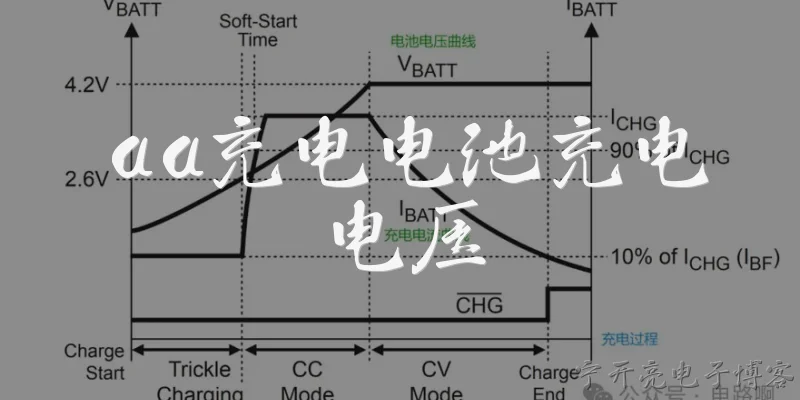
A: When you charge an AA rechargeable battery, the voltage you measure at the terminals is higher than its nominal 1.2V because the charger applies an external voltage to force current into the cell. This is normal and is known as the charging voltage or on-charge voltage. For a NiMH AA cell, the voltage typically rises from around 1.2V to as high as 1.5V or even 1.6V per cell near the end of charge, depending on the charging rate and temperature. The charger must supply a voltage greater than the battery's open-circuit voltage to overcome internal resistance and drive the chemical reaction. As the battery approaches full charge, the voltage peaks and then may slightly drop, which some smart chargers use as a signal to terminate charging (called negative delta V). After you remove the battery from the charger, the voltage will settle back to around 1.2V to 1.3V within a few hours. If the voltage remains unusually high or the battery gets hot, stop charging and check for a faulty charger or battery.
Words of experience
Common scenarios of "AA rechargeable battery charging voltage"
【User】 I just bought some AA rechargeable batteries. What voltage should I use to charge them?
【Expert】 That depends on the battery chemistry. Most common AA rechargeable batteries are either NiMH (Nickel-Metal Hydride) or NiCd (Nickel-Cadmium). For both, the standard charging voltage is around 1.4 to 1.5 volts per cell. However, the charging voltage can vary depending on the charger.
【User】 Mine are NiMH. So I should look for a charger that outputs 1.4V?
【Expert】 Not exactly. The charger's output voltage is usually higher than the battery's nominal voltage to push current into the battery. For NiMH, a typical charger might output around 1.4V to 1.6V per cell, but it's more about the charging current and termination method. Most smart chargers handle this automatically.
【User】 So if I use a charger that outputs 1.5V per cell, is that safe?
【Expert】 Yes, that's generally safe. NiMH batteries can handle charging voltages up to about 1.6V per cell. But you should also consider the charging current. A typical AA NiMH battery has a capacity of 2000mAh, and a safe charging current is around 0.1C to 0.5C, which is 200mA to 1000mA.
【User】 What happens if the voltage is too high?
【Expert】 If the voltage is too high, it can cause overheating, reduced battery life, or even leakage or explosion. NiMH batteries are sensitive to overcharging. That's why smart chargers use delta-V or temperature cutoff to stop charging when the battery is full.
【User】 I see. So what's the ideal charging voltage for NiMH AA batteries?
【Expert】 There isn't a single ideal voltage because charging is a dynamic process. The charger applies a voltage higher than the battery's current voltage to force current in. As the battery charges, its voltage rises. The charger monitors this and stops when the voltage peaks or slightly drops (delta-V). For NiMH, the peak voltage during charging is usually around 1.5V to 1.6V per cell.
【User】 So if I measure the voltage of a fully charged NiMH AA battery, what should it be?
【Expert】 A fully charged NiMH AA battery typically rests at around 1.4V to 1.45V. After a while, it will settle to its nominal 1.2V. So don't be alarmed if it reads 1.4V right off the charger.
【User】 That makes sense. What about the charging voltage for NiCd AA batteries? Is it the same?
【Expert】 NiCd batteries have similar charging voltages, around 1.4V to 1.5V per cell. However, NiCd can tolerate slightly higher charging currents and are more robust to overcharging, but they have memory effect and are less environmentally friendly. Many chargers have a switch for NiMH/NiCd.
【User】 I have a charger that says 1.2V output. Is that enough to charge NiMH batteries?
【Expert】 That's a common confusion. The 1.2V on the charger likely refers to the nominal voltage of the batteries it's designed for, not the actual charging voltage. The charger's open-circuit voltage might be higher, like 1.4V or more. But if it truly only outputs 1.2V, it won't charge the batteries effectively because the voltage needs to be higher than the battery's voltage to push current in.
【User】 So how can I check if my charger is working properly?
【Expert】 You can measure the charger's output voltage with a multimeter when it's not loaded. It should read around 1.4V to 1.6V per slot for NiMH. If it reads 1.2V or less, it might be faulty or designed for a different purpose. Also, check if the batteries get warm during charging—that's normal, but they shouldn't get hot.
【User】 Great, I'll test that. Thanks for the info!
【Expert】 You're welcome! Just remember to use a smart charger when possible, and avoid overcharging. If you have more questions, feel free to ask.