SLA battery:What is an SLA battery and how does it work in 2026?
Q: What is an SLA battery and how does it work in 2026?
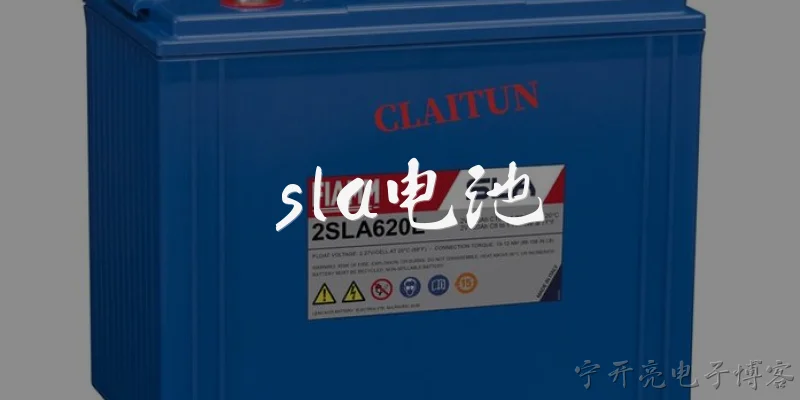
A: An SLA (Sealed Lead-Acid) battery is a rechargeable battery that uses lead and sulfuric acid in a sealed, maintenance-free design. In 2026, the core chemistry remains similar to traditional lead-acid, but modern SLA batteries feature improved valve-regulated construction and higher-purity lead-calcium grids, reducing water loss and extending cycle life. They work through a reversible electrochemical reaction: during discharge, lead dioxide at the positive plate and sponge lead at the negative plate react with sulfuric acid to produce lead sulfate and water, releasing electrons. Charging reverses this process. Because they are sealed, they can operate in any orientation without leaking, though pressure valves safely vent excess gas during overcharge. Today's SLA batteries often incorporate advanced carbon additives in the negative plate to reduce sulfation, a common failure mode. They are still widely used for UPS systems, alarm panels, and solar storage because of their low cost and safety. However, compared to lithium alternatives, SLA batteries have lower energy density and shorter cycle life, typically 200–500 cycles at 50% depth of discharge. For 2026 buyers, look for brands that publish cycle life at specific discharge rates and temperature ranges, as those metrics now differentiate premium SLA models from commodity ones.
Q: How should I charge and maintain an SLA battery for maximum lifespan in 2026?
A: To maximize SLA battery lifespan in 2026, follow a three-stage charging profile: bulk (constant current), absorption (constant voltage), and float (reduced voltage). Use a smart charger specifically designed for sealed lead-acid, with temperature compensation—this is critical because charging voltage must decrease as temperature rises (about -3 mV per cell per °C). For a 12V SLA, typical absorption voltage is 14.4–14.7V at 25°C, and float is 13.5–13.8V. Avoid overcharging, which causes grid corrosion and water loss, and avoid undercharging, which leads to sulfation. Maintain the battery at 50–80% state of charge if storing for long periods, and recharge every 3–6 months. Keep it in a cool, dry place—every 10°C rise above 25°C roughly halves life. In 2026, many users pair SLA batteries with battery monitors or smart shunts to track state of health and internal resistance. Equalization charging is not recommended for most sealed designs unless the manufacturer explicitly allows it at low voltage. Finally, never discharge below 50% depth of discharge regularly; for critical backup, limit to 30% for longer service. Following these practices can extend float life to 5–7 years in ideal conditions.
Q: Are SLA batteries still relevant in 2026 compared to lithium-ion and other new technologies?
A: Yes, SLA batteries remain relevant in 2026, but their role has narrowed to specific applications where low upfront cost, safety, and recyclability outweigh weight and cycle life. Lithium-ion, especially LiFePO4, now dominates new solar storage, EVs, and high-cycle industrial uses because of 3–5x longer cycle life, 50–70% weight reduction, and falling prices. However, SLA still wins in UPS systems for telecom and data centers—especially where batteries sit on float for years and rarely cycle deeply—because the upfront cost per amp-hour is lower and the fire risk is negligible. They also remain common in emergency lighting, security alarms, and low-cost mobility scooters. In 2026, the global lead-acid recycling rate exceeds 95% in many regions, making SLA a circular economy leader, while lithium recycling is still catching up. New carbon-enhanced SLA designs have improved partial-state-of-charge tolerance, closing some performance gaps. For buyers, the decision now hinges on total cost of ownership: if you cycle daily, lithium is cheaper over 5 years; if you need reliable float backup with minimal electronics and lower capital outlay, SLA is still compelling. Watch for regional regulations on lead handling, but SLA is not disappearing soon—it is evolving into a niche but stable technology.
Dialogue about
Common scenarios of "SLA battery"
【Customer】 Hi, I'm looking for a battery for my backup power system. I heard SLA batteries are good. Can you tell me more about them?
【Sales Representative】 Absolutely! SLA stands for Sealed Lead Acid. They are maintenance-free, spill-proof, and can be mounted in any orientation. They're commonly used in UPS systems, emergency lighting, and renewable energy storage. What capacity are you looking for?
【Customer】 I need about 100Ah at 12V. But I'm concerned about the lifespan. How long do they typically last?
【Sales Representative】 Typically, SLA batteries last 3-5 years in standby applications, depending on temperature and depth of discharge. For your backup system, if you cycle them deeply, you might get 200-300 cycles. But if you keep them float-charged, they can last longer.
【Customer】 That seems short. Are there different types of SLA batteries that last longer?
【Sales Representative】 Yes, there are AGM (Absorbent Glass Mat) and Gel variants. AGM is more common and offers better high-current discharge. Gel batteries have a longer cycle life but require slower charging. Both are SLA. For longest life, you might consider a deep-cycle AGM.
【Customer】 What about maintenance? Do I need to add water?
【Sales Representative】 No, SLA batteries are sealed, so you never add water. That's a big advantage. Just keep them charged and in a cool place. But avoid overcharging, which can dry them out internally.
【Customer】 Got it. How should I charge them? Can I use my existing charger?
【Sales Representative】 You need a charger specifically designed for SLA batteries. It should have a float mode and temperature compensation. Using a car charger might damage them. What charger do you have?
【Customer】 I have a standard automotive charger with 10A output. Is that okay?
【Sales Representative】 That could work if it has a setting for AGM or sealed batteries, but many automotive chargers don't. I'd recommend a smart charger with a SLA mode. It's safer and will extend battery life.
【Customer】 Okay, I'll look into that. What about disposal? Are they hazardous?
【Sales Representative】 Yes, lead-acid batteries are hazardous and must be recycled. Most places that sell them will take old ones for recycling. Never put them in regular trash.
【Customer】 Good to know. Can you recommend a specific brand or model for my needs?
【Sales Representative】 For a 100Ah 12V deep-cycle AGM, brands like Trojan, Fullriver, and VMAX are reputable. I'd suggest the VMAX XTR12-100 or Trojan SAGM 12 105. They're both good for backup systems.
【Customer】 Thanks. What's the price range for those?
【Sales Representative】 Expect to pay between $200 and $350 per battery, depending on brand and warranty. Trojan is usually on the higher end but lasts longer.
【Customer】 That's within my budget. One last question: can I connect multiple batteries in parallel to increase capacity?
【Sales Representative】 Yes, you can connect them in parallel to increase amp-hour capacity, or in series to increase voltage. Just make sure they are the same age, type, and capacity to avoid imbalance. Always use proper fusing and wiring.