Electric fish machine transformer winding:What is an electric fish machine transformer winding and how does it work?
Q: What is an electric fish machine transformer winding and how does it work?
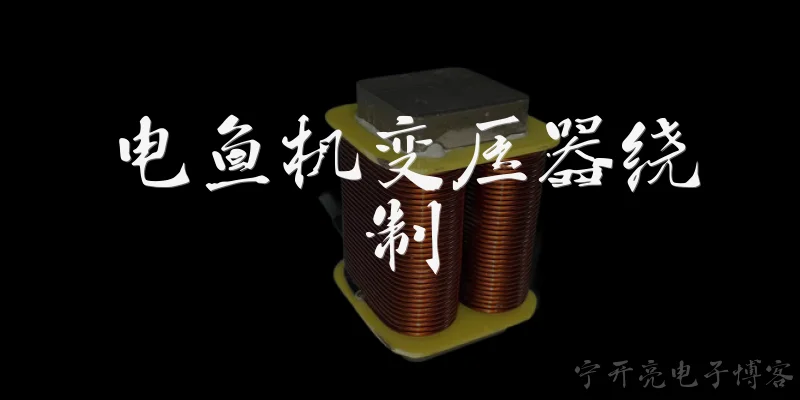
A: An electric fish machine transformer winding is a key component used in electrofishing equipment to step up low-voltage DC power from a battery to high-voltage pulses. The winding consists of primary and secondary coils wound around a ferromagnetic core. When current flows through the primary winding, it creates a magnetic field that induces a much higher voltage in the secondary winding due to the turns ratio. This high voltage is then discharged into water to stun fish temporarily for sampling. The winding must be carefully insulated to prevent short circuits and is often potted in resin to withstand moisture. Proper design ensures efficient energy transfer, minimal heat loss, and reliable operation in harsh field conditions, making it essential for fisheries research and management.
Q: What materials are typically used for transformer windings in electric fish machines?
A: Transformer windings in electric fish machines commonly use enameled copper wire due to its excellent electrical conductivity, flexibility, and resistance to corrosion. The copper wire is coated with a thin layer of insulating enamel, such as polyurethane or polyester, to prevent turn-to-turn short circuits. For higher voltage secondary windings, multiple layers of insulation like Kapton tape or Nomex paper may be added. The core is usually made of laminated silicon steel to reduce eddy current losses. Some designs employ litz wire to minimize skin effect at higher frequencies. The entire winding assembly is often vacuum-impregnated with varnish or epoxy to protect against moisture, vibration, and chemical exposure in aquatic environments. These material choices ensure durability, efficiency, and safety during electrofishing operations.
Q: How can I troubleshoot a faulty transformer winding in an electric fish machine?
A: To troubleshoot a faulty transformer winding in an electric fish machine, first disconnect power and discharge any capacitors. Use a multimeter to check continuity across the primary and secondary windings; an open circuit indicates a broken wire. Next, measure resistance to ground or between windings to detect insulation breakdown; any reading below infinite suggests a short. A shorted turn can be identified with a ring tester or by comparing inductance values with a known good transformer. Visually inspect for burnt spots, melted insulation, or corrosion. If the winding is potted, look for cracks or bulges. Sometimes the issue is a loose connection at the terminals. If the winding is faulty, replacement is usually necessary, as rewinding is complex and may not be cost-effective for small machines.
Q: What are the key design considerations for a transformer winding in an electric fish machine?
A: Key design considerations for a transformer winding in an electric fish machine include turns ratio, wire gauge, insulation, and thermal management. The turns ratio determines the output voltage and current, which must be optimized to stun fish without causing injury or mortality. Wire gauge affects current capacity and resistive losses; too thin a wire overheats, while too thick adds weight and cost. Insulation must withstand high voltage and environmental moisture, often requiring multiple layers and impregnation. Thermal management is critical because electrofishing pulses generate heat; adequate ventilation or heat sinks may be needed. Additionally, the winding must be physically robust to endure field use, including shock and vibration. Efficiency and waveform quality also matter, as poor design can lead to harmful harmonics or inconsistent output. Balancing these factors ensures safe, effective, and reliable operation.
Words of experience
Common scenarios of "Electric fish machine transformer winding"
【Engineer】 Hi, I'm having trouble with the transformer winding on our electric fish machine. The secondary coil keeps overheating. Any ideas?
【Technician】 What's the machine's power rating and the wire gauge you're using?
【Engineer】 It's a 5 kW unit, and we're using 18 AWG enameled copper wire for the secondary.
【Technician】 18 AWG might be too thin for that current. What's the secondary voltage and current?
【Engineer】 Output is 500V at 10A. That's 5kW, but the wire feels hot after a few minutes.
【Technician】 10A through 18 AWG is definitely over its safe limit. You should use at least 14 AWG or parallel strands.
【Engineer】 But we need many turns to get 500V. Using thicker wire will make the coil too bulky.
【Technician】 Consider using a ferrite core with higher permeability to reduce turns, or use Litz wire to mitigate skin effect.
【Engineer】 We already have a ferrite core, but it's not high permeability. What about interleaving windings to reduce leakage inductance?
【Technician】 Interleaving can help, but overheating is mainly from I²R losses. Focus on reducing resistance first.
【Engineer】 So if I switch to 14 AWG, how many turns do I need for 500V?
【Technician】 Depends on core cross-sectional area and frequency. What's your operating frequency and core specs?
【Engineer】 Frequency is 20 kHz, core is EE55 ferrite, Ae=350 mm², Bmax=0.2T.
【Technician】 Using Faraday's law: N = V / (4.44 * f * Bmax * Ae). For 500V, that's about 500 / (4.44*20000*0.2*350e-6) ≈ 80 turns. Check my math.
【Engineer】 Let me calculate: 4.44*20000=88800; *0.2=17760; *350e-6=6.216; 500/6.216≈80.4. Yes, about 80 turns.
【Technician】 80 turns of 14 AWG on EE55 might fit if you wind neatly. Use a bobbin with multiple slots to increase creepage distance.
【Engineer】 We also need isolation for the fish tank. Should I use triple-insulated wire?
【Technician】 Yes, for safety, use triple-insulated wire or add insulation barriers between primary and secondary.
【Engineer】 What about cooling? Should I add a fan or oil immersion?
【Technician】 For 5kW, forced air cooling might suffice if you use proper wire gauge. Oil immersion is better but messy. Monitor temperature and adjust duty cycle if needed.