Universal Inverter Module:What is a Universal Inverter Module and how does it differ from a standard inverter?
Q: What is a Universal Inverter Module and how does it differ from a standard inverter?
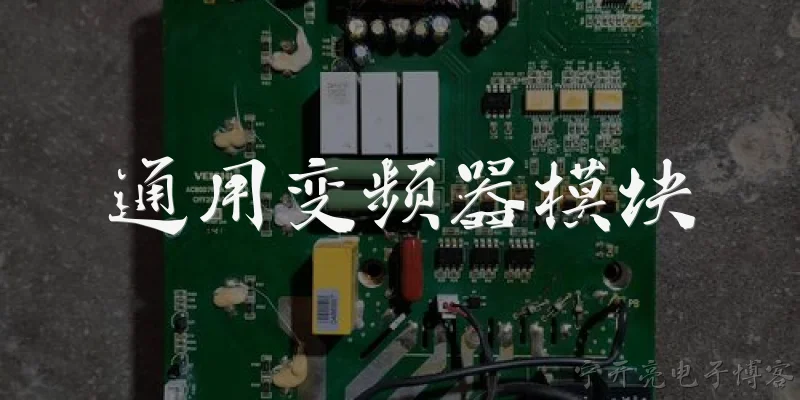
A: A Universal Inverter Module is a compact, pre-engineered power electronics assembly that converts DC to AC with configurable control and protection features. Unlike a standard inverter, which is often fixed for a specific voltage, frequency, or load type, a universal module typically supports a wide DC input range, adjustable AC output (single- or three-phase), and multiple communication protocols. It integrates IGBT or SiC switching devices, gate drivers, DC-link capacitors, current/voltage sensing, and often a digital signal processor. This modularity allows one hardware platform to serve solar, battery, motor-drive, or UPS applications with only firmware or wiring changes. In practice, it reduces design time, inventory costs, and certification effort because a single module can be deployed across many products. It is not necessarily a complete inverter; it is the core power stage that engineers integrate into their own enclosure and control system.
Q: What are the main components inside a Universal Inverter Module and how do they work together?
A: Inside a Universal Inverter Module, the key blocks are the DC-link, power stage, gate drive, sensing, and control. The DC-link uses electrolytic or film capacitors to smooth the input and handle ripple. The power stage contains six or more IGBTs/MOSFETs arranged as a three-phase bridge, or fewer for single-phase. Gate drivers amplify low-voltage PWM from the controller to switch the power devices safely. Sensors measure DC bus voltage, output currents, and temperature; these signals feed a DSP or microcontroller. The controller runs a PWM algorithm such as space-vector modulation, closes current/voltage loops, and handles fault protection. Auxiliary supplies provide isolated gate and logic power. Together, they convert DC into a regulated AC waveform. The module's universality comes from flexible firmware and configurable I/O, allowing the same hardware to act as a grid-tie inverter, motor drive, or active filter.
Q: What are the key benefits of using a Universal Inverter Module in product development?
A: Using a Universal Inverter Module provides three major benefits: faster time-to-market, lower total cost, and easier scalability. Because the power stage, gate drive, and sensing are pre-designed and tested, engineers skip months of high-voltage layout, thermal, and EMC work. One module can serve multiple product lines—say, a 5 kW solar inverter and a 7.5 kW motor drive—by changing firmware parameters and connectors, which reduces inventory and qualification effort. The module often comes with safety certifications and reference designs, lowering compliance risk. Scalability is another advantage: you can parallel modules for higher power or use a smaller variant for lower power without redesigning the control board. Finally, reliability improves because the module is optimized for thermal and switching performance, and faults are handled locally. The trade-off is less flexibility in form factor, but for many applications the savings outweigh that limitation.
Q: What are typical applications of a Universal Inverter Module?
A: Typical applications span renewable energy, industrial drives, and backup power. In solar, the module forms the core of a string or hybrid inverter, converting PV or battery DC to grid-compliant AC. In energy storage, it enables bidirectional operation for charging and discharging. For motor drives, it powers variable-frequency drives for pumps, fans, and conveyors, often with sensorless field-oriented control. In UPS and emergency power systems, it provides clean sine-wave output during outages. Electric vehicle chargers use it for AC-DC or DC-DC stages. Other uses include active power filters, grid-tie converters for wind turbines, and programmable AC sources for test benches. Because the module supports different voltage classes and switching frequencies, the same hardware can be repurposed across these markets. The common thread is the need for efficient, controllable DC-to-AC conversion with protection and communication, which the universal module delivers out of the box.
Words of experience
Common scenarios of "Universal Inverter Module"
【Customer】 Hi, I'm interested in the Universal Inverter Module. Can you tell me more about it?
【Sales Engineer】 Hello! The Universal Inverter Module is a versatile power conversion device designed for a wide range of applications. It can convert DC to AC and AC to DC, with adjustable output voltage and frequency. What specific application do you have in mind?
【Customer】 I need it for a solar power system. Can it handle 5 kW of power?
【Sales Engineer】 Absolutely. Our standard model supports up to 10 kW, so 5 kW is well within its capacity. It also includes MPPT (Maximum Power Point Tracking) to optimize solar panel output.
【Customer】 That sounds great. What about efficiency? I want to minimize losses.
【Sales Engineer】 Our inverter boasts a peak efficiency of 98%, which is among the highest in the industry. It uses advanced silicon carbide (SiC) semiconductors to reduce switching losses.
【Customer】 Impressive. Can it operate in parallel with other inverters for higher power?
【Sales Engineer】 Yes, it supports parallel operation with up to 10 units, allowing scalability up to 100 kW. The built-in communication interface ensures load sharing and synchronization.
【Customer】 What about monitoring and control? Does it have remote capabilities?
【Sales Engineer】 It comes with Wi-Fi and Ethernet connectivity, and you can monitor and control it via our mobile app or web portal. It also supports Modbus TCP for integration with SCADA systems.
【Customer】 Is it compatible with different battery types?
【Sales Engineer】 Yes, it works with lead-acid, lithium-ion, and flow batteries. You can configure the charging profile through the user interface to match your battery specifications.
【Customer】 What about certifications? I need it to meet local standards.
【Sales Engineer】 Our inverter is certified to UL 1741, IEC 62109, and CE. We can provide the necessary documentation for your region.
【Customer】 How about the warranty and support?
【Sales Engineer】 We offer a 10-year standard warranty, extendable to 15 years. Our global support team is available 24/7 for technical assistance.
【Customer】 What is the price for a 5 kW unit?
【Sales Engineer】 The list price for the 5 kW model is $2,500. We offer discounts for bulk orders and have financing options available.
【Customer】 That's a bit higher than I expected. Can you do better?
【Sales Engineer】 I understand. Let me check if we have any ongoing promotions. If you order before the end of the month, I can offer a 10% discount, bringing it to $2,250. How does that sound?
【Customer】 That's more reasonable. I'll consider it. Can you send me a detailed datasheet?
【Sales Engineer】 Of course! I'll email you the datasheet and a quote. Please let me know if you have any further questions.